
Visit to Cieza and Siyasa museum
Cieza is only 10km up the road from Blanca and the drive passes through the town of Abaran. The reason why I actually visited Cieza was because it was the closest town to where the Vuelta Espana cycle race (Tour of Spain) was due to pass on the Sunday (stage 9). However arriving in the town it didn’t look like the Vulea was actually going to pass through the town as there was zero activity. It turned out the closest point of approach was 5km out of town, so a walk over there did allow me to see the race. The main interest is definitely the museums and there appear to be two main museums that tell the history of the area at different stages.
Museo del Esparto de Cieza
On the map I noticed there were a couple of museums in Cieza.
Museo del Esparto de Cieza - https://www.museodelespartocieza.com
Museum dedicated to the harvesting and production of esparto grass.
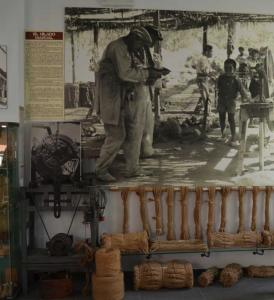
About the museum:
‘The Museum is a permanent exhibition of old original machinery and tools, braided and belongings, illustrated with printed and photographic documentation. As it is a living museum, it is ensured that the visiting public can relive the old and diverse Sparteros works directly. From observing and touching the esparto plant itself (atocha), the utensils and tools used in the different jobs, the varied braids and household and agricultural equipment mainly, to seeing how the scourers for domestic cleaning are made by means of manual traction razors and, especially, witnessing demonstrations of spinning with wheel for ropes, made in the old way by an guos master spinners.’
I have an interest in museums such as this that preserve the history and memory of something that was so deeply engrained in the community. I’ve always had a strong connection with the land, maybe because my mother was brought up on a farm and her parents were farm workers and their parents before them. On my father’s side, his relatives also worked the land and they also worked as ‘carters’ at Culzean castle in Ayrshire, Scotland. I visited a similar heritage museum in Fyti, Paphos District, Cyprus, where the processed and tools that were used to work the land in days gone by could be viewed. I admired their simple but clever designs.
Siyasa Museum
The other museum in Cieza is the Siyasa Museum. This museum is dedicated to the early medieval town that was established by The Moors on the hill side above the present day town. The museum displays many artefacts that have been retrieved from the town, which is very well preserved due to the fact that it was abandoned and left undisturbed. There is also a re-creation of how a building would have looked, with it’s inner court yard.
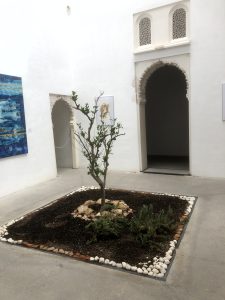
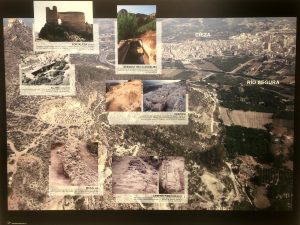


It was great to learn something about the history of the area. The museum goes further back than the early medieval period, with displays dedicated to the prehistorical caves in the area. Most of the caves also contain cave paintings. It was in 2022 that I got to see a cave painting in the real, so to speak when in France. The painting is in a cave in the Tarn valley, which also has evidence of mass hunts for Mammoths where the hunters would work to drive the Mammoth’s of cliff faces. The fact was established by the butchering remains at the bottom of the cliff. It is quite amazing to actually see a cave painting up close. It’s almost impossible to imagine such a giant leap back in time, however looking at the paintings allow us to try and make such a leap.


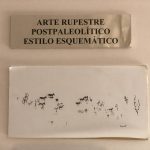

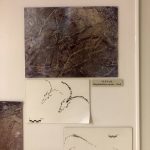


Therefore it was of great interest to learn from the museum display that there are several prehistoric cave sites around the Cieza area. These very early first expressions of human creativity continue to amaze and inspire. Perhaps sometime I can return and visit the sites. Having visited the site in France made me think of the universal need for shelter. Standing in the cave and looking out at the world outside, there was a sense of protection and the imagination turned to what it must have been like for those early humans, sitting in the cave at night with a fire burning and the wild animals roaming on the landscape outside. These animals were central to the prehistoric life and were the subject of the cave paintings. Exactly what the cave paintings meant has always been subject to interpretation. However a recent theory is evidenced by the presence of marks (sequences of dots) made on the cave walls next to the animals to show when they are in season and available for hunting. So they may actually function as a guide book for others to use to know when and what can be hunted. I’ve always been interested in the idea and notion of shelter and what it means. I’ve always believed that every human should have a roof over their heads.
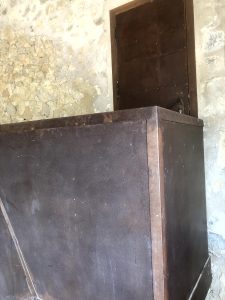
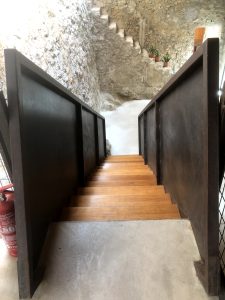
It was later on in my art journey that I became more familiar with the works of the Italian Arte Povera artist Mario Merz and his Igloo constructions. In fact before this one of my main inspirations was the work of Jannis Kounellis, who was also part of the Arte Povera movement. Incredibly, I got to meet Jannis when he had a retrospective at Tramway in Glasgow, Scotland. He was at the opening night for his show and I approached him and simply said ‘Mr Kounellis congratulations on a wonderful exhibition. I love your work so much’ and shook his hand. I recall this not for the sake of name dropping, but to point out that his manner was incredibly modest and he had the time to speak with someone who was for all intent and purposes, just a normal member of the public. The Centro Negra in Blanca is actually like a very large full scale Kounellis sculpture, with it’s oxidized iron works:

A little excerpt about Kounellis and Merz from wikipedia:
‘Jannis Kounellis and Mario Merz attempted to make the experience of art more immediately real while also more closely connecting the individual to nature. In his (Untitled /Twelve Horses), Kounellis brings the real, natural life into the gallery setting, by showing twelve horses racked-up on the gallery walls. Recalling the Dada movement and Marcel Duchamp, his aim was to challenge what could be defined as art, but unlike Duchamp, maintains the objects real and alive, redefining the notion of life and art, while keeping both entities independent.’
In short, the whole process of visiting these museums has informed a long standing interest in the landscape, nature, the primitive and the objects that we make to entwine and mesh them together.